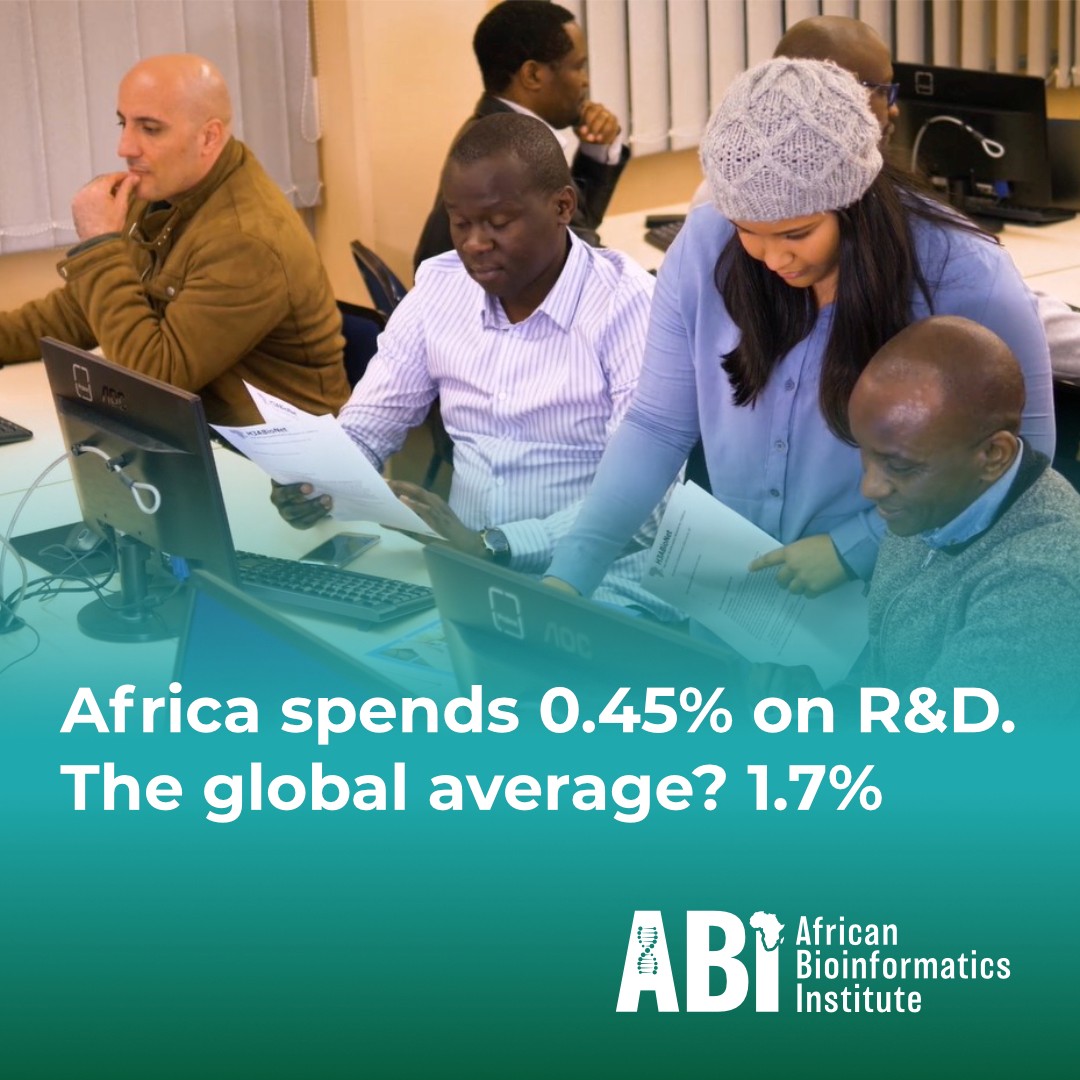
Africa accounts for nearly 19% of the global population, yet produces around 3% of the world's scientific research. The real-life implications are vast and include countries lagging behind economically, an over reliance on foreign technology and the lack of culturally appropriate, context specific responses to issues such as disease outbreak and food insecurity.
Now imagine a future in which African countries can mount timely, evidence-based responses to disease outbreaks from within the contexts where they emerge. A future where genomic surveillance enables faster outbreak detection, bioinformatics strengthens the development of locally relevant diagnostics and treatments, and data-driven agricultural research boosts crop resilience.
This vision underpins the establishment of the African Bioinformatics Institute (ABI), which aims to provide the tools, training, and infrastructure necessary for African researchers to participate fully and equitably in global research efforts. The Institute’s interim lead, Professor Nicola Mulder explains the imperatives behind ABI and its role in advancing African data sovereignty, scientific leadership, and research capacity.
Q: What is the state of data governance on the continent? Why does it need to change?
A: Previously the global north worked with locals to get samples and then generated and analysed the data off the continent, meaning the African collaborators had less (or no) ownership of the data and forfeited prominent positions in authorship. Recognising the injustices, this has changed over time. But many projects still rely on international partners to help analyze the data, so local researchers and their students lose first or senior authorship on resulting publications.
This balance needs to shift. African scientists must be able to collect, generate and analyze their own data on the continent. Data governance policies should oversee data sharing to ensure it is as open as possible and as closed as necessary in line with consents (if human data), IP policies and data protection laws. Many countries have implemented data privacy laws over the last few years and data governance frameworks need to be updated to align with these.
ABI can increase awareness of the importance of robust and fair data governance, upskill African scientists in all aspects of data management and analysis, and also ensure that African datasets are FAIR – findable, accessible, interoperable and reusable. Making data FAIR requires skills, resources and access to data catalogs and repositories: all the things ABI can provide.
Q: What does it mean for Africa to own and analyse its own data?
A: It means that data generating projects are African led from start to finish. Local ownership of data empowers researchers to derive value from the data. The principal investigator knows the communities or contexts in which the data were collected, and is better informed to correctly interpret the data. They should be able to use the data to answer key research questions and have the potential to translate the outputs into actionable impact. We, at ABI, can equip them with the bioinformatics skills required to do this.
Q: Can you share examples of African-led projects where controlling data locally made a real impact?
A: In H3Africa, the projects were African-led, which meant that the PIs had control over their data and that the resulting publications were African-led. In some cases the PIs were also able to feed back findings to their communities to impact health.
Q: What are the biggest challenges to achieving data sovereignty in Africa, and how can they be overcome?
A: There are a number of challenges, including conforming with different country data privacy laws, limited data stewardship skills and resources, and data infrastructure for secure local data storage. In a changing data protection landscape, scientists need to navigate the laws, participant consents and funder data sharing requirements, many of which may be unaligned.
If data cannot move, secure research environments are required for safe analysis of data without data being downloaded. Setting this up and sustaining it requires money, IT infrastructure and skills. Hosting data in local African repositories also requires long term funding and the right skills and infrastructure. Given the potential impact of local use of data, governments should invest in these skills and infrastructure. Such efforts can be supported through ABI, as many of the data challenges are common across the continent.
Q: How do you see ABI contributing to Africa’s data sovereignty?
A: ABI can address the skills gap for implementing data governance frameworks through coordinated training in areas not always covered by traditional degree programs, such as ethics, data curation and stewardship, IT infrastructure for biomedical data, data and data security. ABI can raise awareness of existing data governance frameworks and policies, and help countries to adopt international data sharing standards such as GA4GH to ensure secure, responsible and ethical use and sharing of data.
ABI members have several years of experience in FAIR data management and building African data resources. With sustainable funding, the institute can develop and provide African data repositories and help to make datasets FAIR.The benefit the ABI provides is bringing together diverse skills to solve these diverse, yet common, challenges.
Conclusion
Africa, with its exceptional biodiversity, diverse human populations and expanding research programmes, is rich in data. Scientists across the continent are conducting impactful research. But this work can be hampered by misaligned data governance policies, limited skills, resources, and infrastructure. ABI seeks to support African-led data generation, analysis, and sharing by providing training in data stewardship, bioinformatics, ethics, and secure data management. By building on the existing talent, the institute can help ensure that African researchers and communities benefit from their own data.